Most of us didn’t grow up learning how to set boundaries. If we were among the lucky few, we had healthy examples to guide us—people who showed us, often without words, how to recognize and honor our own limits. For the rest of us, though, boundaries are something we only start to understand when they’re violated.
We feel it in our bodies first: a racing heart, sweaty palms—that unmistakable sense that something isn’t right. And in the midst of that emotional or physical response, we often scramble to fix things, reacting from a place of overwhelm.
In moments like these, we need something solid to hold onto. That’s where metaphors come in. Boundaries can feel abstract and hard to define, so using a metaphor can help make sense of them. They give us a handle—something to grasp when everything feels too vague or slippery.
Garden Boundary Metaphor
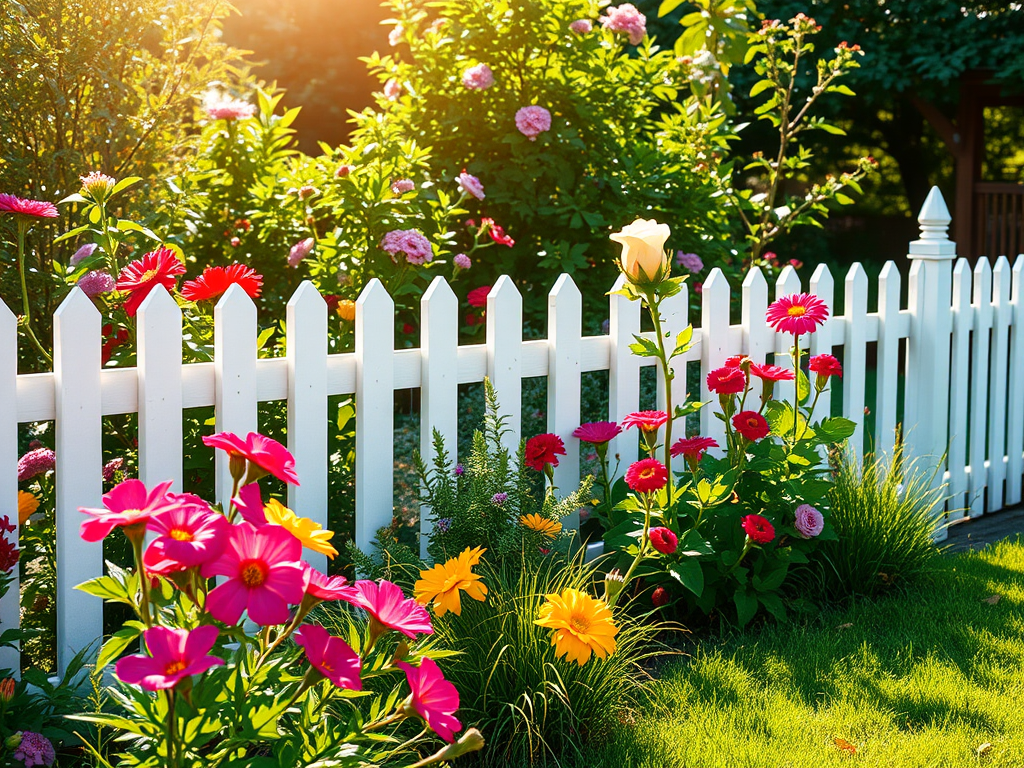
Picture a garden, it can look however you want. What plants are growing in it? Flowers? Vegetables? Shade trees or fruit? Maybe there is a little bench, or a curated stone path. Perhaps it is freshly mulched with a basket full of the seasons harvest. Or maybe it is a little overgrown, the tomatoes are fighting for soil with some weeds, or a windfall of apples are scattered across the ground. Some gardens might even have more rocks than workable soil.
These insides of the garden represent what is your responsibility. Your thoughts, your feelings, your emotions, your reactions, your behavior. Just like you have autonomy
over what you choose to plant and care for in your garden, you have the autonomy these things in your control.
Garden Boundaries: Where does my garden end and another’s begin
Just as important as what lives inside the garden is what surrounds it.
Every garden has edges. Those edges tell others where the garden begins and where it ends. They communicate—often without a single word—what is welcome, what requires permission, and what is off-limits.
Some gardens are surrounded by thick cinder block walls. No gates. No windows. Nothing in, nothing out. These walls are often built after repeated harm, betrayal, or neglect. They make sense as a survival strategy. If people kept trampling your plants or taking what wasn’t offered, of course you’d want something impenetrable. But over time, walls like this can block more than danger—they can block light, connection, and the possibility of shared growth. Safety matters, but so does access.
Other gardens have no fence at all. No markers. No signs. People wander in freely—sometimes with good intentions, sometimes not—stepping on seedlings, picking fruit, rearranging things without realizing the damage they’re causing. When there are no boundaries, others can’t know where your responsibility ends and theirs begins. And the gardener is often left feeling depleted, resentful, or confused about why things keep falling apart.
Neither extreme is particularly nourishing.
A healthier alternative is something more like a picket fence.
A fence that clearly says: this is my space. It’s not aggressive or hostile—it’s simply informative. It lets others know where the garden is, what belongs to you, and how to engage respectfully. And importantly, it has gates. Maybe more than one.
Some gates open easily. Others require trust, consistency, or time. Some open for certain seasons and close for others. This doesn’t make you unkind—it makes you intentional. Gates allow connection without sacrificing care. They let you decide who comes in, when, and how long they stay.
And here’s where other people’s gardens matter.
Tending Other People’s Gardens
As we become more attentive to our own gardens, we also start to notice that not everyone is working with the same soil, tools, or weather conditions. Other people’s gardens are shaped by experiences we may never fully see—what they were taught about care, protection, or growth; whether their land was respected or repeatedly trampled; whether anyone ever showed them how to build something that lasts.
For many of us, noticing another person’s struggling garden triggers something automatic. We see wilting plants and reach for our tools. We pull weeds, water excessively, reinforce their fence, or start planting on their behalf. This is often where overfunctioning begins—not from control or arrogance, but from empathy, fear, or a deep discomfort with watching someone struggle.
Over time, this can slide into codependency. When we take responsibility for tending someone else’s garden, we unintentionally rob them of the chance to learn what their soil needs. The garden might look better for a while, but it becomes dependent on our presence. And we, in turn, become invested in outcomes that were never fully ours to manage.
The unintended consequences are subtle but significant. Resentment grows quietly in the background—ours, because we’re exhausted and unacknowledged; theirs, because even well-meaning help can feel intrusive or shaming. Roles become blurred. We start measuring our worth by how much we give, how much we fix, how indispensable we are. Meanwhile, our own garden begins to suffer from neglect.
Conflict, then, often arises not from ill intent, but from confusion about where one garden ends and another begins. We step into someone else’s space without realizing it. Or someone wanders into ours, picking fruit we weren’t ready to offer, rearranging things we worked hard to grow. When this happens repeatedly, resentment builds—not because gardens shouldn’t be shared, but because sharing requires clarity and consent.
Healthy boundaries remind us of an essential truth: we can care about other people’s gardens without being responsible for them. We can offer tools, share knowledge, admire growth, and even collaborate—without taking over. When each gardener is accountable for their own plot, relationships become more balanced, more respectful, and far more sustainable.
Reflection: Getting Curious About Your Garden
Take a moment to picture your garden as it is right now—not how you wish it looked, but how it truly is.
- What feels tended and thriving?
- Where does it feel overgrown, depleted, or neglected?
- What kind of boundary surrounds it—walls, no fence at all, something in between?
Now consider the gates.
- Who has easy access to your garden?
- Who has access that feels earned, intentional, or seasonal?
- Are there any gates that need reinforcing, opening, or closing for a while?
Finally, ask yourself:
What is one small change I could make to better protect or nourish my garden this season?
You don’t need to redesign everything at once. Boundaries, like gardens, grow stronger through attention, patience, and care—one thoughtful adjustment at a time.
Using the Garden Metaphor to Navigate Sticky Situations
If you’ve been in a situation that has you feeling that pit in your stomach– that hard to explain, but so familiar feeling, that is so hard to sit with— it might be because either your boundary has been crossed or you are crossing into someone else’s garden. Try our free worksheet to work your way through and see what you might need for your garden in this situation.